Columbia University School of the Arts: 1965-2025
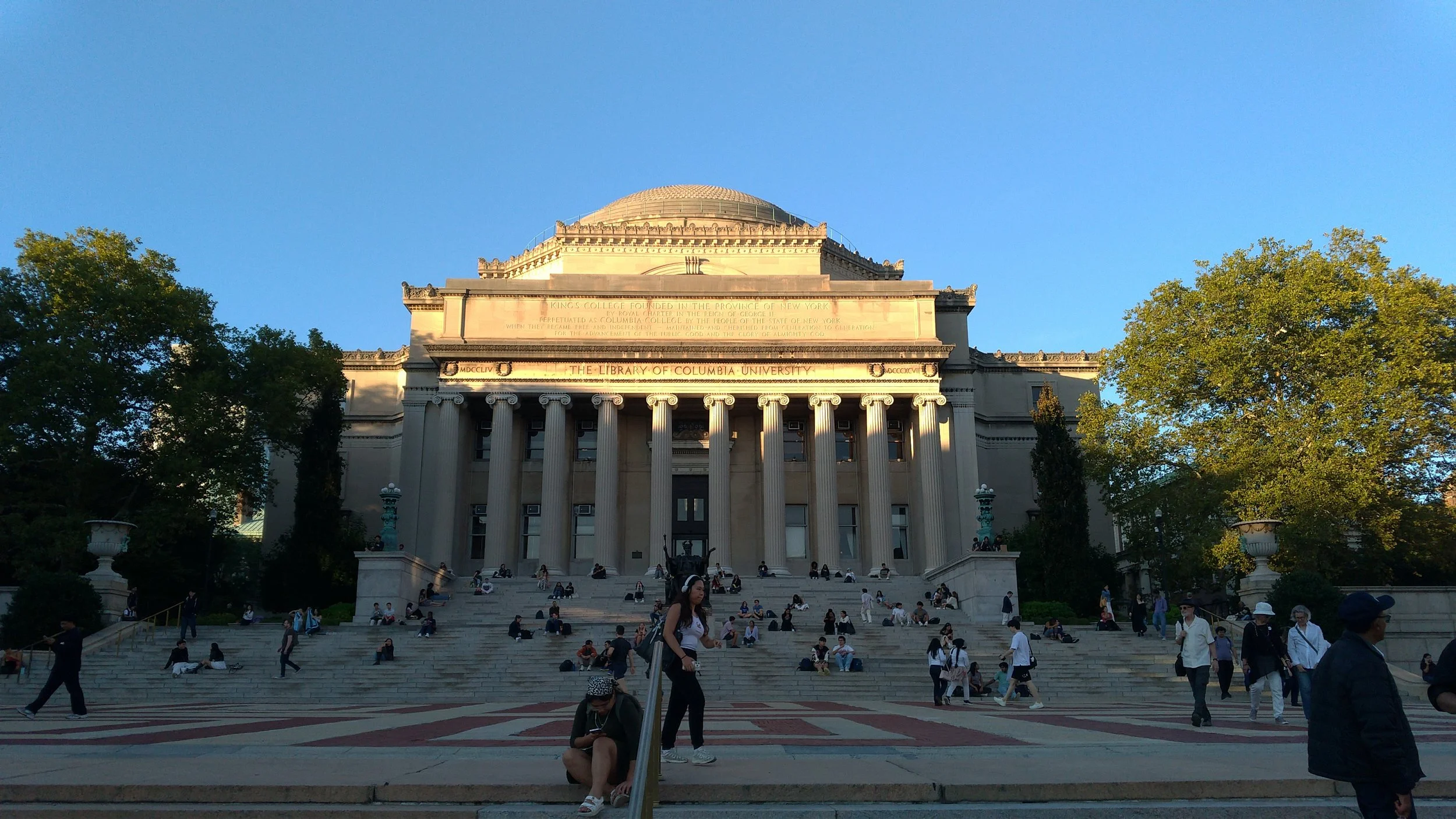
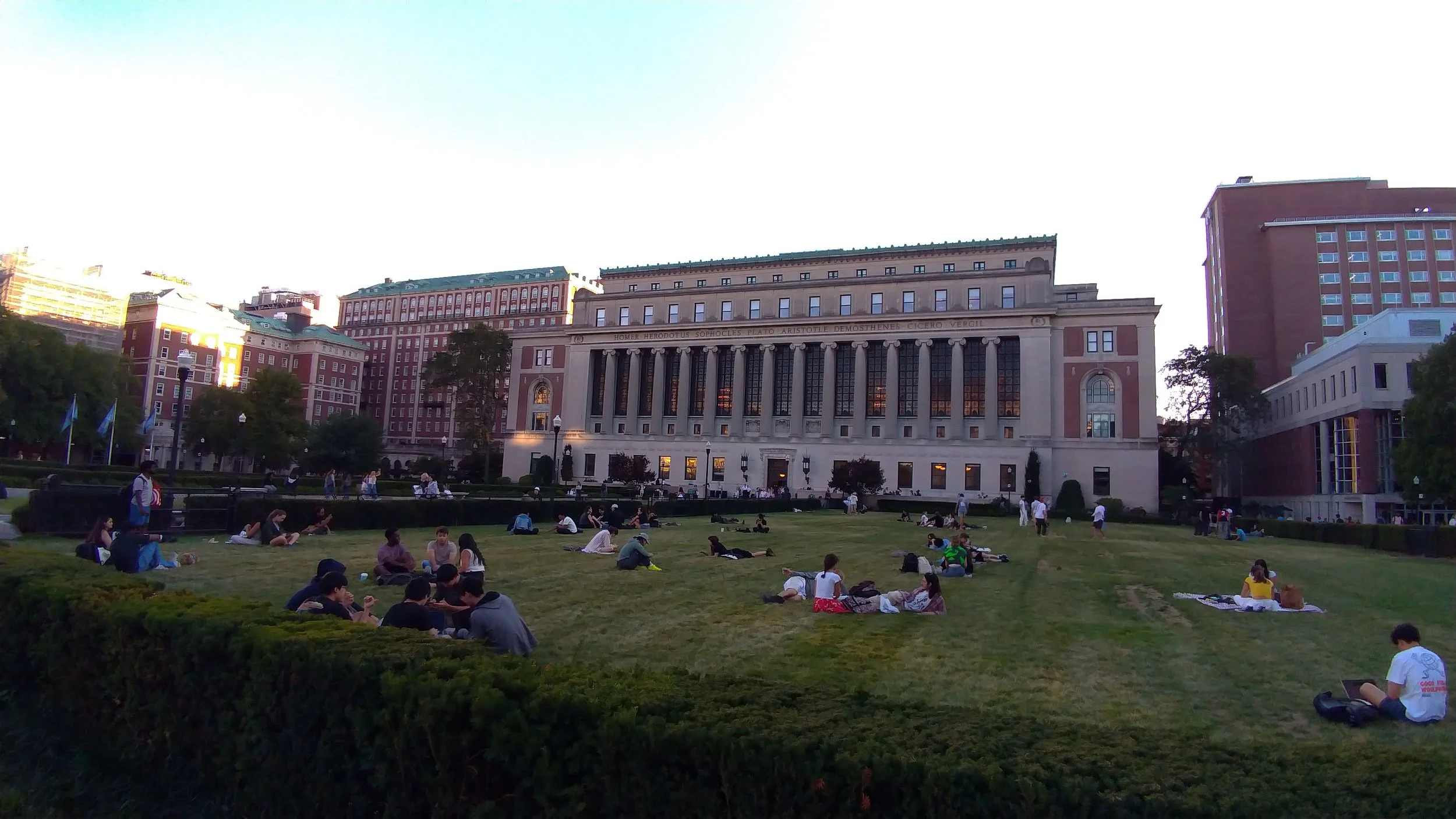
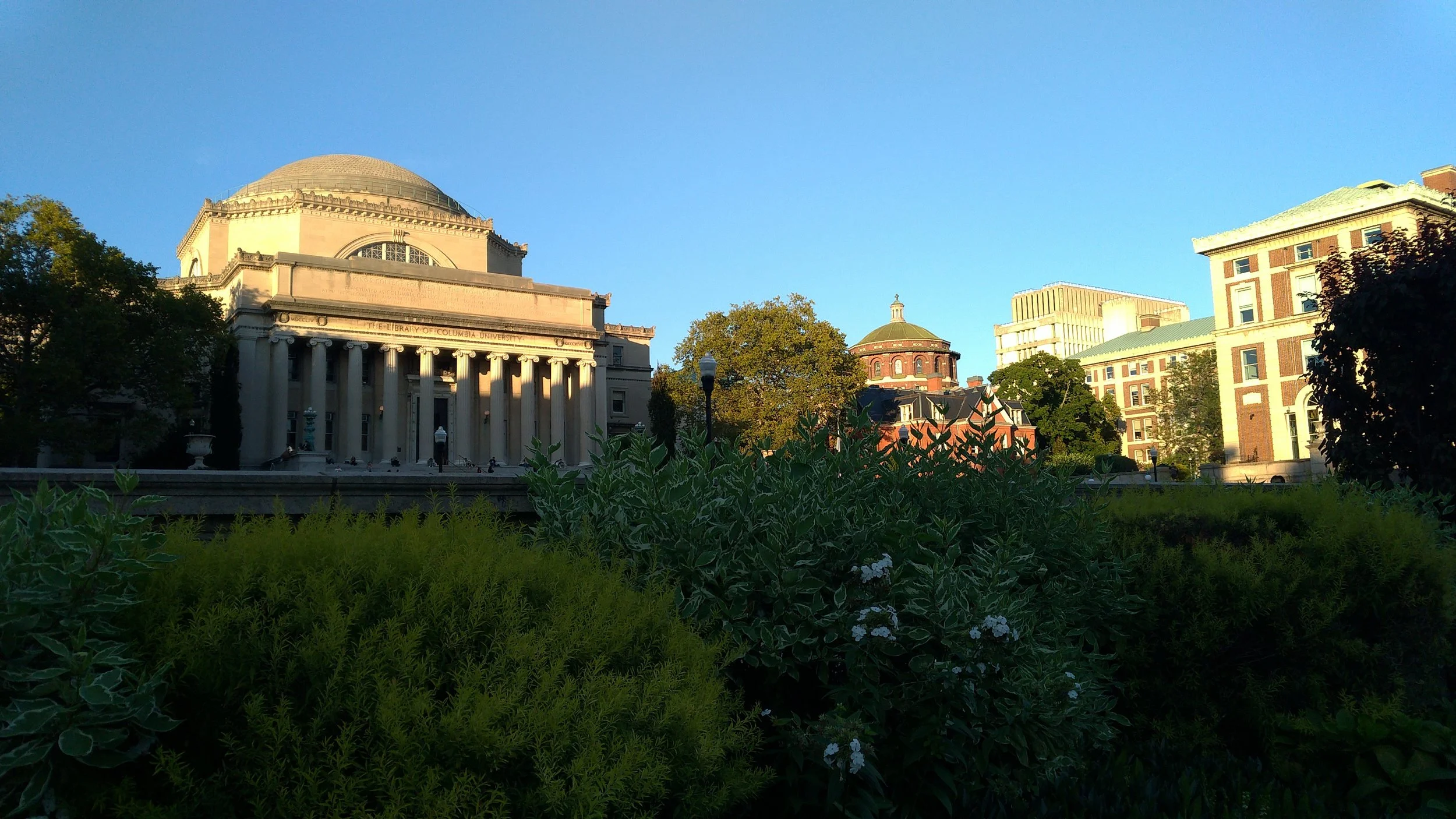
Columbia University School of the Arts turns 60 this year, and I am completing two decades since entering its MFA in Theatre Directing. Wouldn't you know: all of 2025 I've been thinking about my personal anniversary and have been frantically evaluating where I was/what I was doing/who I was in 2005, when I started the prestigious Master of Fine Arts program, and, here you go, the public celebration bumped into me.
First realization: I have been there for one third of the school's life. No, I'm not an eternal student (not on paper, I mean) – I graduated promptly in 2008, as predicted by the student guidebook. Upon entering the school, our identity consisted of three elements: name, concentration (apart from directing, the program includes acting, playwriting, dramaturgy, stage management, and management/producing) and expected year of graduation. Yes, our name tag did not indicate 2005 – the year we got in – but 2008. American optimism (but also programming, and faith in success) in all its grandeur. It was August 2005 when the first semester started, and yet, in all written and electronic communication, for Columbia I was the one who would graduate in 2008 (a year that then appeared surreal to me, centuries away).
(It is the same optimism with which they invite you to dinner a year from today's date, and they expect you to reply. Seriously. No comparison to the Greek “God willing.” Sneak in a “weather permitting,” at least. Whenever I use the expression “if all goes well,” my American friends always think that something bad has already happened: “-Why do you say that, did something bad happen? -No, but you never know.” Greek tragedy is in our blood.)
So, by saying that I've been there for twenty years I mean that I never got far from Columbia, neither in spirit nor in flesh: I still live in the same neighborhood, my “office” is still in Butler Library (at the café), I still watch movies at the Maison Française, I still rehearse in the same studios (whenever that possible), and I don't miss workshop, lecture, reception or pizza lunch open to alumni. 100% fixation! I went to so much trouble both to get in and to graduate from the demanding university, and now I'm gonna leave? I'm not going anywhere.
On the occasion of the school's anniversary, it is natural for the spotlight to fall on the names and the awards – the Oscars, the Emmys, the Tonys and the Pulitzers (apart from Theatre, the other three departments of the SoA are Film, Writing and Visual Arts). What better advertisement and confirmation of the value of a much sought-after graduate training program, considered among the top not only in America but also around the globe, than its illustrious alumni and professors, and even more so, those who have been honored with the tangible, coveted statuettes, seals of success in the arts' stock market?
The names of my personal experience (2005-2008)
So, let me play the name-dropping game too, only, in this case, it will be celebrities with whom I developed some kind of relationship during my three-year tenure, to whom I bumped into, with whom we crossed paths and some sort of exchange, chemical reaction took place, not just names that signal “red carpet”:
Bob
I will never forget that I found myself front row in a Bob Wilson lecture: I thought that maybe I had died and was in heaven, since, watching my idol talk, I felt as if a cycle of my life had closed. The exquisite American's shows (so venerated in Paris that you would think he is French) I had fallen in love with when I left to pursue my first master's degree at the Sorbonne in 1997. Soon thereafter, I had been blown away discovering the performance-homage to Wilson (under the eloquent title Bob) by another American director, named Anne Bogart; and now, wouldn't you know: I am studying directing, and my professor is none other than that director, and the charming, chic (maybe even a tad snobbish), but thoroughly delightful guest speaker is none other than... Bob.
Kevin (and his friend, Meryl)
Our other directing professor, Brian Kulick, has invited us to a Shakespeare masterclass at Classic Stage Company, where he was Artistic Director at the time. The instructor is Kevin Kline. Upon exiting the subway, I realize that I'm not simply walking side by side with Meryl Streep, but that we're also headed to the same place – she too is going to the same “class,” taught by her friend, Kevin.
From prison to the presidency
In the fall of 2006, Vaclav Havel is honored with an official residency at the university (“Havel at Columbia”), and while directing his play, Protest, on my mind is From prison to the presidency, his autobiographical book, which we had in our family bookcase in Athens.
Samantha and the other one
Kim Cattrall is taking questions from students in the “black box” in which we spent our days and nights for three years, the legendary Schapiro Theatre on West 115th Street just off Broadway, and she has left me speechless: I know her only as the hypersexual New Yorker Samantha from Sex and the City, and in front of me I have a disciplined classy Brit, who talks about the actor's trade with a sharp tongue and the guts of a corporate executive.
Can Epidaurus fit in a black box?
But the crowd was left equally speechless by Lydia Koniordou, who brought into the Schapiro “trenches” the magic and splendor of Epidaurus, without even performing a line or two from Electra – she simply got up and stood in the middle of the circle of the directing students, and, just like that, we all thought we had been transported to the mystical Argolic land. Months later, I was still proudly receiving congratulations from my classmates for bringing the Greek tragedian to the “Visiting Directors” class and, with her, Epidaurus into the black box.
And since we're in the trenches of Schapiro, out of the thousands of work hours, emerge some snapshots engraved in my memory, as Kim Weild, our classmate a year senior in the directing concentration, had very wisely warned us while showing us, the freshmen, around: “In here you will see the best theatre you've seen in your life, but also the worst.” I'm going to focus on the best: Rebecca Easton's work on the exercise “direct Death of a Salesman as a dream”; the moment at which the panel of the set falls with a loud noise to indicate the passage of time in the Seagull as seen by Michael Rau; Laura Campbell, directed in a Shakespearean monologue by Tony Speciale. (May the rest of my classmates forgive me: due to space limits I can't include here all the exquisite moments we were blessed to share.)
A special place is reserved for the snapshots where national identities come together, where the work of the “here” and the “there” becomes one, i.e. performances where Greek artists honored me with their collaboration. Kalliopi Tzermani offers her temperament to French materials by acting with astonishing sincerity but also finesse in Marivaux excerpts, as well as in A Flean in her Ear, my thesis production. In the above-mentioned Feydeau, she is accompanied by the unforgettable Babis Gousias, who steals the show, whereas Dimitris Pleionis steals hearts (theatrically speaking) in Greek drama scenework but also in Viewpoints-technique exercises. Erato A. Kremmyda made only a simple musical “gesture” in that same Flea, and yet, her contribution was decisive. And as fas a Georgia Sagri goes, it took her only some tiny “brushstrokes,” visual and musical, to turn herself into a vital element of the world of my Three Sisters.
Theatre training before the era of the outlet of the platform
I'm not going to fall into the trap of talking about “Gen Z 1997 nostalgia” (in Brooklyn, the 25-year-olds are ditching their smartphones and are returning to the good old landline, hung on the kitchen wall, ubiquitous in American sitcoms), but I am wondering about a fundamental difference between the theatre training of the “then” and that of the “now”: how is the student-artist influenced by today's possibilities to quickly and easily present, share manifestations of their artistic self?
In my days, the core of a director's training were the weekly (sometimes biweekly, or even three times a week) scenework presentations, and their corresponding critique sessions, in the presence of only teachers, classmates and maybe some collaborators. If you got a bad grade, you carried it, and you had to train yourself in digesting it, processing it, with limited outlets available: taking a walk in the city, talking with classmates or roommates, communicating with family and friends outside America (that one much harder).
And of course all of the above in super tight time limits because one of the principles of the specific training is, precisely, to train you in working efficiently under time pressure and lack of ideal conditions – you had to hold auditions and cast your pieces on your own (actors were not given to you by the school), you had to fight to book rehearsal space etc. None of the three fundamental parameters of directing – actors, space, time – was abundantly available, purposely, because – you guessed it – that is the reality of the art of theatre: nothing is ever given to you plentifully, and if you don't learn that at the MFA training, when and where will you learn it? When you go out in the jungle, it will be too late.
None of the above-mentioned outlets after the negative critique contained manifestations, iterations of the Artistic Self. The Artistic Self had to quickly return to rehearsal, take the notes and try to interpret and implement them in a fertile way in the next scenework presentation. Today there is the possibility of immediately available manifestations of the Artistic Self. And I say “manifestations” because it is not the Artistic Self per se; the Artistic Self in essence is not materialized, not revealed except in the pure theatrical product – the work on stage (speaking always about the directing student). The MFA student today, as soon as the work in the black box is over, is free to upload in a slew of platforms content related to the work – photos and videos from rehearsal or research, and the like. Even if the work you end up showing in class is bad, you have the ability to rush to the platforms and rave about the fact of the presentation, regardless of its theatrical quality or evaluation within the framework of the course, and upgrade it into an event with impressive digital content.
The option of the outlet of the platform may detour your attention from class and from the critique by classmates and professors, which was the reason why you enrolled in grad school in the first place. Moreover, as it supplies an easy way of consolation, it encloses the danger of getting used to it, of getting too comfortable with that outlet. (Again, always speaking about the student-artist, not about what is happening in the outside brave new world of the Web, where reigns supreme the prophetic saying by Yannis Tsarouchis, the great Greek painter, that “[in Greece] you are what you state you are.” Of course, it's already been ages since, in the World Wide Web, we are all already what we state we are.) In other words, you might become accustomed to the logic “even though professors and classmates gave me a negative critique, I will upload some awesome reels on Insta, and forget myself.”
These “digital demons” – versions of the Artistic Self – inhabit the surrounding landscape; they take space. How does today's student-artist manage to discern the true Artistic Self – the one that really counts, as far as the training is concerned – as opposed to its images that are mere mirroring, reflections?
This essay first appeared in Greek in the TO PONTIKI newspaper (online) on November 19, 2025.
Το κείμενο αυτό πρωτοδημοσιεύτηκε στην εφημερίδα ΤΟ ΠΟΝΤΙΚΙ (ηλεκτρονική έκδοση) στις 19 Νοεμβρίου 2025.
Για να διαβάσετε το ελληνικό κείμενο, κάντε κλικ εδώ.